Jane Carrick

I started my PhD in the marecotec lab in September 2020 after earning my Masters of Professional Science (MPS) degree in marine conservation at the University of Miami, where I focused on employing coral restoration techniques to enhance coastal protection. 

What made you decide to go into marine science?

I chose to study marine science because the ocean is full of species that are somehow both ancient but also constantly adapting to environments that would feel as foreign and harsh to humans as outer space. I wanted the chance to disentangle some of the complexities of marine systems, especially those that are ecologically important like coral reefs. It’s exciting to think that now might the best time in history to study the ocean since we are in an age of accelerating technology that allows us to explore areas that have previously never been accessed by humans.

What is the focus of your research/work? What do you think is the most important takeaway from your research?

I study how hydrodynamic regimes influence the distribution and ecology of deep-sea reefs. Using time series of environmental characteristics like temperature, turbidity, water chemistry, and organic material, I look for patterns that can be related to ocean currents like the Gulf Stream, and how these patterns can influence potential benefits and/or stress conditions on a reef. I also look at small-scale flow patterns around coral skeletons using an experimental flume, which can help us understand things like food delivery and gamete export in different conditions

What is the coolest thing you’ve done through your work?

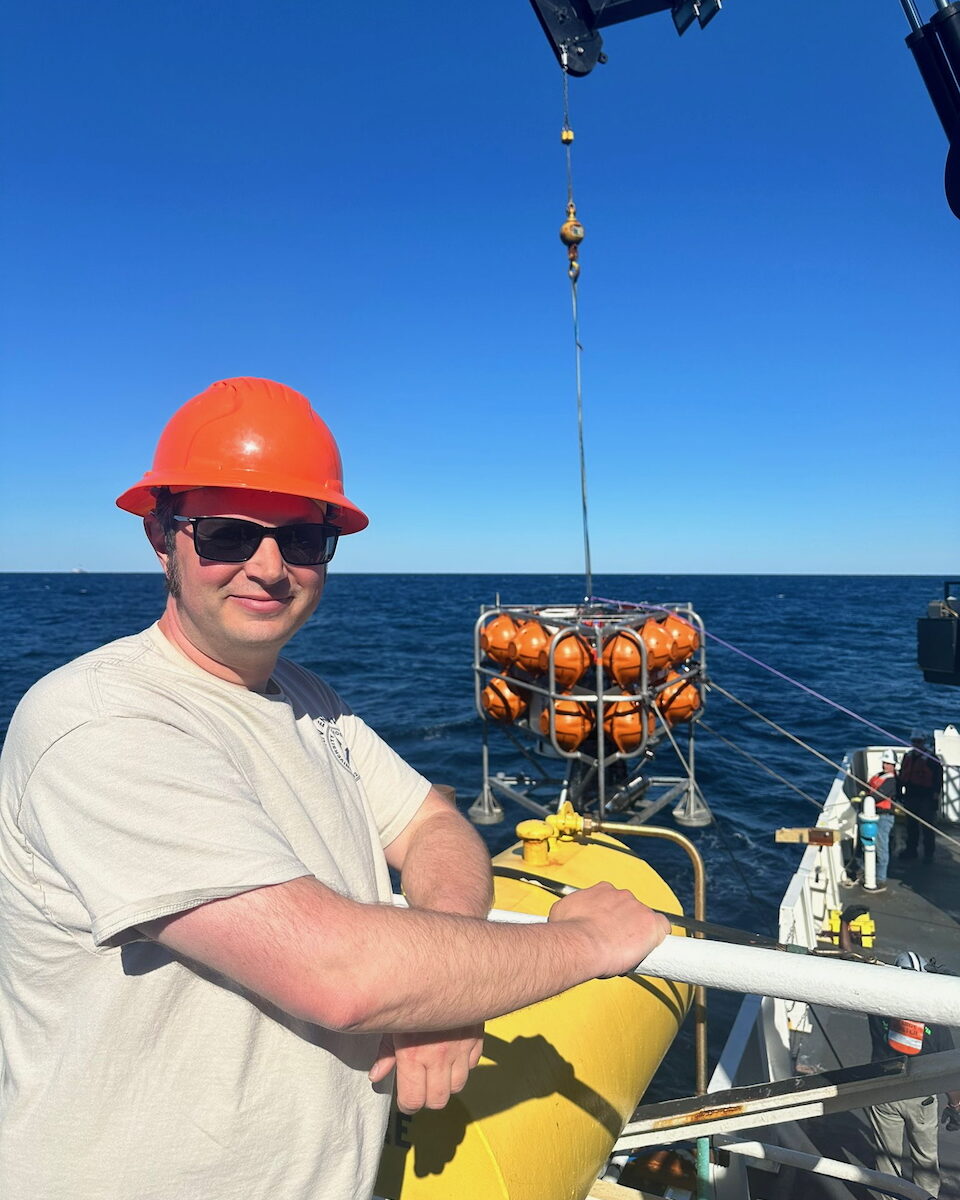
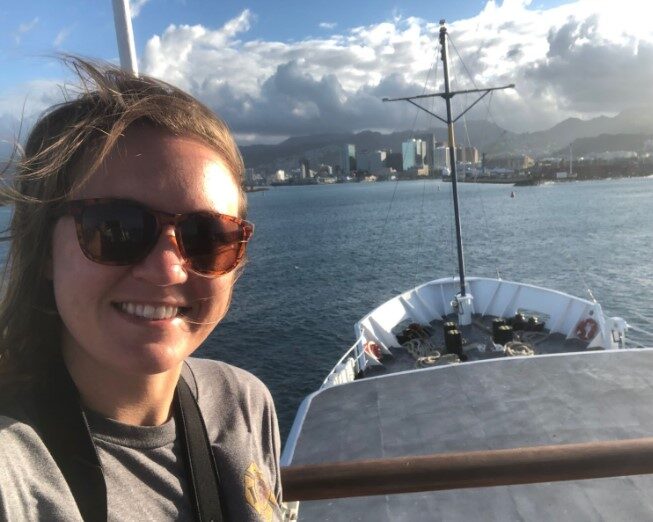
Getting to work on ships has been my favorite experience since starting my PhD. There are so many things I love about it, from learning how to operate highly specialized equipment, to exploring life in the deep sea first-hand, to sharing the experiences with friends and family through telepresence. It’s also allowed me to develop strong relationships with some amazing scientists and crew members from all over the world.

What is one fun fact about you?

I love to draw in my spare time, and consider one of my favorite media to be sharpie on styrofoam cup (we shrink these by sending them to deep-sea depths on CTD casts and ROV dives).

If you could have any superpower, what would it be and why?

Shapeshifting definitely. It means you could fly by shifting into a bird, become (virtually) invisible as a bug, or turn into anyone you want all with just one super power.
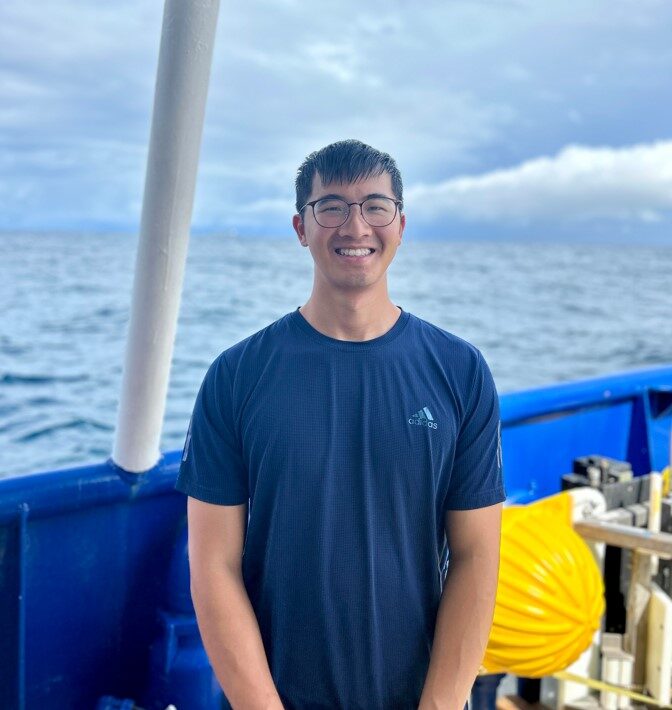
Philip Yang

I am a PhD candidate and NOAA Dr. Nancy Foster Scholar in Biological Oceanography at the University of Rhode Island Graduate School of Oceanography. I joined the lab in Fall 2022. My graduate work focuses on the environmental drivers of mesophotic coral ecosystem distribution in the Gulf of Mexico and how diel vertical migrators serve as a potential persistent food source for cold-water coral habitats. I hold a Bachelor of Science in Biology (’21) from Villanova University and previously worked in wetland/mangrove ecology, grassland ecology, and fisheries sustainability.

What made you decide to go into marine science?

Growing up on Lake Champlain in Plattsburgh, NY, I always enjoyed being around the water even though I was never on it much. When I was 12, I read most of the Clive Cussler ‘Dirk Pitt’ collection. The underwater world gripped me with adventure, but it wasn’t quite enough to convince me to be a marine biologist. When I entered Villanova, climate change and ecosystem conservation were my main interests. There, I became interested in ecosystem ecology, largely because of inspiring professors and mentors who gave me opportunities. In the Changley Lab, I learned about mangroves, wetlands, climate change impacts, and human-environment interactions. I also became interested in geographic information systems (GIS). Before I graduated (during COVID) I applied (and was somehow awarded) a Fulbright U.S. Student research grant (2021-’22) to study fisheries sustainability with the USAID Fish Right in the Philippines and was based in Coron, Palawan. These experiences led me to graduate school to learn more about ecology and the ocean. I have always been curious and, although I like marine life and the ocean, I would say my curiosity and desire to make a difference for our blue planet is what has truly led me to where I am today.

What is the focus of your research/work? What do you think is the most important takeaway from your research?

My thesis focuses on how the distribution of mesophotic coral ecosystems is affected by seasonal river plumes, how mesophotic ecosystems are impacted by tropical cyclones (hurricanes), and how diel vertical migrators serve as a potential persistent food source to cold-water coral reefs. Autonomous benthic lander systems tie these projects together. I use time-series data from lander deployments (Eulerian single-point observatories) to answer questions related to these topics. The ocean is an observation-limited environment, and measuring the natural environment for marine ecosystems is key to understanding how anthropogenic climate change and other disturbances will impact coral reefs (akin to the tropical rainforests of the ocean) across the world at local and regional scales over the next few decades and centuries.

What is the coolest thing you’ve done through your work?

Cool is a weird word and more of a feeling to me, but I felt “cool” when piloting a remotely operated vehicle (ROV) on a research cruise aboard the R/V Pelican (shoutout to the Marine Applied Research & Exploration team).

What is one fun fact about you?

I spent 7 days in the Denali wilderness and met two grizzly bears and one moose!

If you could have any superpower, what would it be and why?

I would like to be able to breathe in any medium (liquid, gas, solid). I have a fear of drowning so maybe this would ameliorate that.

Sarah Davis

I joined the MarEcoTec lab (and am jointly part of the Echinonerd Lab) in 2021 to pursue my doctorate in biological and environmental sciences. I completed my bachelor’s in environmental studies and economics and my master’s in conservation biology before moving to the Ocean State. 

Sarah is a graduate student studying microplastics and is funded by NOAA and the USGS.

What made you decide to go into marine science?

The ocean is a life-sustaining resource for humankind, and as the sink for most anthropogenic waste, it is particularly vulnerable to the impacts of pollution. I’m interested in learning more about the sources, movement, and fate of plastic pollution within our planet’s marine areas and helping protect those habitats most at risk. As a former professional science educator, I’m passionate about engaging local communities in hands-on science research and facilitating environmental literacy in coastal areas.

What is the focus of your research/work? What do you think is the most important takeaway from your research?

My research focuses on building robust assessments of microplastics in Narragansett Bay and Rhode Island’s freshwater resources, including conducting extensive field work and managing laboratory processing. My field methods include seasonal manta trawl surveys, pump filter system sampling, and event-responsive grab sampling. In addition, I am undertaking experimental trophic transfer work to better understand the movement of plastics through coastal food webs. I think the most important takeaway from my research is that pollution is very difficult to address once it is in the environment – prevention is the key to sustainability. 

What is the coolest thing you’ve done through your work?

I designed and implemented aquarium experimentation using both indoor and outdoor flow-through seawater systems. Through this work I learned new skills I never had the opportunity to develop before, including plumbing, electrical work, and carpentry. 

What is one fun fact about you?

I won a betta fish at a carnival in 2nd grade and it lived for 8 years. R.I.P. Sushi – gone but never forgotten.

If you could have any superpower, what would it be and why?

To make a parking space appear on campus whenever I want. 

Andy Davies

Welcome to our research group website! I am an ecologist with a background and active research career in the marine environment. I mostly work on reef formers, organisms that build structures that influence the surrounding environment.

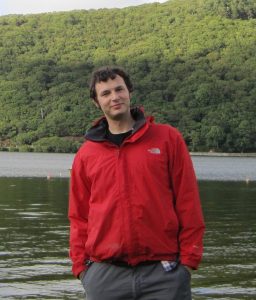
Andy in recent years.

I started the lab in 2009 when I was an early career academic at the School of Ocean Sciences at Bangor University in the United Kingdom. My initial vision was to fuse my interests of ecology and oceanography with a life long passion for technology and computing.

I graduated from my PhD back in 2004, where I worked on the interaction between a common intertidal grazer and the long-lived brown alga Ascophyllum nodosum. I used GIS and remote sensing tools to help understand how the dynamics of this interaction changed over several decades, building in experimental and observational work to help support my search for these drivers. Once I completed, I moved to the Scottish Association for Marine Science as a post-doctoral researcher where I was exposed to cold-water corals and from there I continued to develop my career, culminating in where we are today.

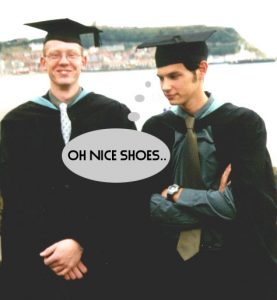
Me and Dom at UG Graduation in 2001 when I thought it was funny to add captions to everything.

What made you decide to go into marine science?

I think I am very lucky to have had all the opportunities that I have had to date, and I can trace back my route to when I was looking at colleges after finishing high school. I really had no clue about what I wanted to do and marine biology seemed interesting as I was always interested in how ecological and biological processes worked.

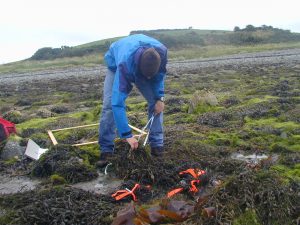
Field work in Strangford, 2002.

What is the focus of your research/work? What do you think is the most important takeaway from your research?

The one thing that ties together all the different aspects of our group is the word “reef”. Everything else revolves around that, why do we build technology? To study reefs. Why do we work with remotely sensed or GIS data? To study reefs. I see reefs as an interesting ecological and physical conundrum, many individuals working together to create habitat, competing against one another whilst facilitating space, complexity and resources for others. It is a truly amazing and dynamic ecosystem to study.

What is the coolest thing you’ve done through your work?

Cool is all relative. I like fixing things and figuring out problems. So generally, that makes me feel cool when I can solve something that has been bugging someone for a while.

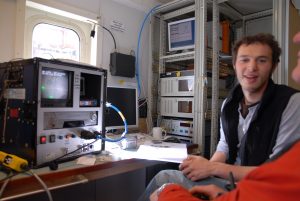
A younger version of me in 2006 on the RV Pelagia, BIOSYS research cruise. Hours of hopper-camera.

What is one fun fact about you?

I like to mow my lawn on the weekend.

If you could have any superpower, what would it be and why?

Teleportation, as I hate traveling.

I am a profoundly deaf cochlear implant user, fully oral and also a BSL user. In recent years, I have acted as a deaf role model for the National Deaf Children’s Society, and volunteer on many events with the NDCS during the year. I am also on the Welsh NDCS Advisory Committee.